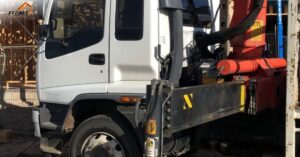

On modern construction sites, efficiency, safety, and flexibility can make or break a project’s timeline and budget. Moving heavy materials quickly and accurately is a daily challenge for builders, especially when sites are tight, uneven, or constantly changing. While forklifts have long been a staple in construction logistics, more builders are choosing HIAB trucks as a smarter, more versatile alternative.
So what’s driving this shift? Let’s break down why HIAB trucks are increasingly becoming the go-to solution for builders.
1. One Machine, Multiple Jobs
One of the biggest advantages of a HIAB truck is its multifunctionality. Unlike a forklift, which is primarily designed for lifting and transporting palletized loads over short distances, a HIAB truck combines transport and lifting in one vehicle.
A HIAB truck can:
- Transport materials directly from supplier to site
- Lift heavy loads using a mounted crane
- Place materials precisely where they’re needed
This eliminates the need for separate delivery trucks and on-site lifting equipment. For builders, that means fewer machines to coordinate, lower equipment rental costs, and smoother workflows.
2. Superior Reach and Precision
Forklifts are limited by their mast height and forward reach. They require clear access and relatively flat ground to operate safely. HIAB trucks, on the other hand, are equipped with hydraulic cranes that can lift materials over obstacles, fences, and buildings.
This precision is invaluable on busy construction sites where space is limited. Materials can be placed:
- Onto upper floors
- Behind structures
- Over retaining walls or barriers
The ability to “lift and place” rather than “lift and drive” saves time and reduces the need for manual handling or repositioning.
3. Better Performance on Tight or Uneven Sites
Construction sites are rarely perfect. Uneven ground, mud, slopes, and restricted access can make forklift operation difficult or downright unsafe. Forklifts also require sufficient turning space, which isn’t always available in urban or residential projects.
HIAB trucks are designed to work in challenging environments. With stabilizing outriggers and crane-based lifting, they can safely operate where forklifts struggle. Builders working on renovations, infill developments, or roadside projects often find HIAB trucks far more practical.
4. Reduced Labor and Handling Risks
Every time materials are moved, there’s potential for damage or injury. Forklifts often require multiple handling steps: unloading, transporting, repositioning, and final placement. Each step increases risk.
HIAB trucks reduce handling by allowing materials to be lifted directly from the truck and placed exactly where needed. This:
- Minimizes manual lifting
- Reduces on-site traffic
- Lowers the risk of accidents and damaged materials
Fewer handling steps mean safer sites and better compliance with workplace health and safety standards.
5. Time Savings That Add Up
Time is money in construction. Coordinating deliveries, forklifts, and operators can slow projects down, especially if equipment isn’t available when needed. HIAB trucks streamline this process by handling delivery and placement in one operation.
Builders benefit from:
- Faster unloading times
- Less waiting for equipment
- Improved scheduling reliability
When materials arrive and are installed immediately, crews can get to work without delays. Over the course of a project, these time savings can be significant.
6. Ideal for Heavy and Awkward Loads
Not all construction materials are forklift-friendly. Steel beams, roof trusses, prefabricated panels, and long or irregular loads can be difficult to balance and transport on forklift tines.
HIAB trucks are specifically designed to handle heavy and awkward loads. With slings, chains, and lifting attachments, cranes provide better load control and stability. This makes them ideal for structural components that require careful placement.
7. Cost-Effective for Many Projects
At first glance, forklifts may seem like the cheaper option. But when you factor in delivery coordination, rental costs, operators, and potential delays, the equation changes.
HIAB trucks can be more cost-effective because they:
- Reduce the number of machines required
- Lower labor costs
- Minimize material damage
- Improve project efficiency
For short-term projects or sites with limited access, hiring a HIAB truck often delivers better value than maintaining forklift operations.
8. Flexibility Across Different Project Types
From residential builds and commercial developments to infrastructure and landscaping projects, HIAB trucks adapt easily to different construction needs. Builders appreciate having a single solution that works across multiple job types without specialized setups.
This flexibility makes HIAB trucks especially appealing for builders who manage varied projects and need reliable logistics support.
Conclusion
While forklifts still have their place in warehouses and controlled environments, construction sites demand more flexibility, reach, and efficiency. HIAB trucks offer builders a powerful combination of transport, lifting, and precision that forklifts simply can’t match.
By reducing handling, saving time, improving safety, and adapting to challenging site conditions, HIAB trucks help builders work smarter, not harder. It’s no surprise that more construction professionals are hiring HIAB trucks as their preferred material-handling solution.