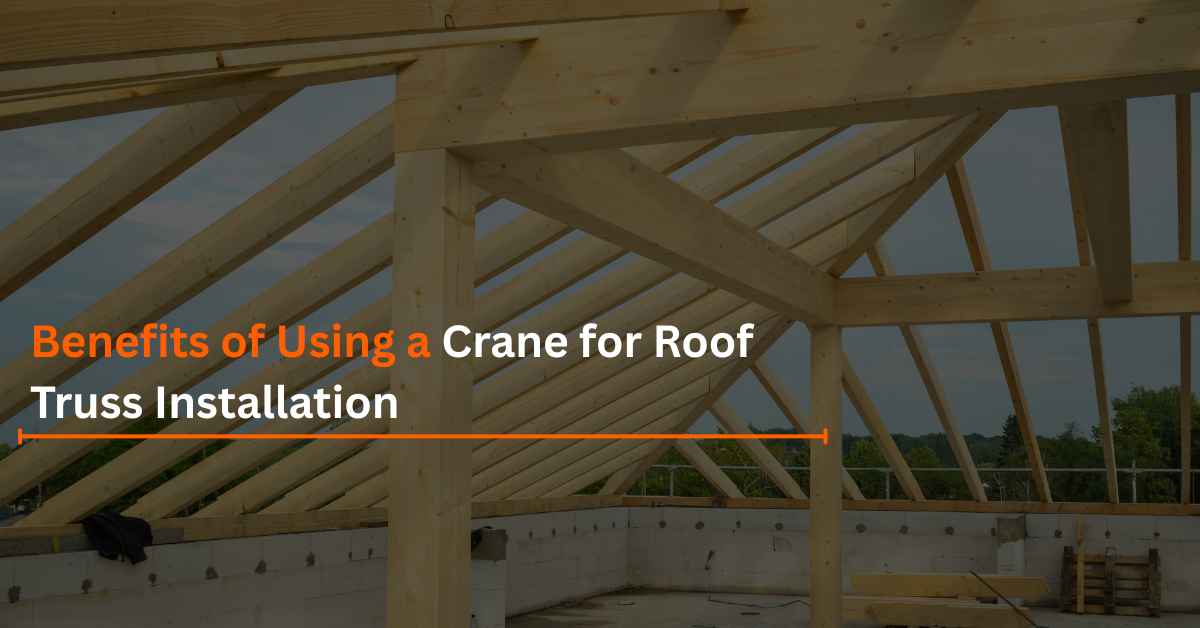
Roof trusses are one of the most important structural components of any residential, commercial, or industrial building. Designed to support the roof and evenly distribute weight, trusses are often large, heavy, and difficult to manoeuvre manually. This is why many builders and contractors rely on cranes to lift and position roof trusses safely and efficiently.
Using a crane for roof truss installation not only speeds up the construction process but also improves safety, reduces labour costs, and ensures greater precision. Whether you’re building a new home or working on a large commercial project, hiring a crane can make a significant difference to the success of your project.
In this blog, we’ll explore the key benefits of using a crane for roof truss installation.
1. Improved Safety on Site
Safety is one of the biggest reasons builders choose cranes for roof truss installation. Roof trusses can weigh hundreds of kilograms, making manual lifting both difficult and hazardous.
A crane eliminates much of the heavy lifting, reducing the risk of workplace injuries such as:
- Back strains
- Muscle injuries
- Falls from height
- Dropped materials
- Crush injuries
Professional crane operators are trained to lift and position loads safely while following strict Australian safety standards. This helps create a safer work environment for everyone on site.
2. Faster Installation
Time is money in the construction industry. Using a crane significantly reduces the time required to install roof trusses.
Instead of manually lifting and positioning each truss using multiple workers, a crane can lift trusses directly from the delivery truck and place them exactly where they are needed.
This allows construction teams to:
- Complete roofing work faster
- Stay on schedule
- Reduce project delays
- Improve overall productivity
For larger developments, the time savings can be substantial.
3. Greater Precision
Roof trusses must be positioned accurately to ensure the structural integrity of the building.
Cranes provide precise lifting and controlled placement, allowing installers to align each truss correctly before securing it in place.
Accurate positioning helps:
- Reduce installation errors
- Improve roof alignment
- Minimise adjustments
- Ensure better structural performance
This level of precision is difficult to achieve when relying solely on manual lifting methods.
4. Reduced Labour Requirements
Without a crane, installing roof trusses often requires a larger crew to lift, carry, and position heavy components.
Using a crane reduces the number of workers needed for heavy lifting, allowing your team to focus on securing and installing the trusses efficiently.
This can lead to:
- Lower labour costs
- Better workforce productivity
- Reduced physical fatigue
- More efficient use of skilled tradespeople
5. Handles Heavy and Large Trusses with Ease
Modern roof trusses are becoming larger as homes and commercial buildings feature wider spans and more complex roof designs.
Many trusses are simply too large or too heavy to lift safely by hand.
Cranes are specifically designed to handle:
- Large timber trusses
- Steel roof trusses
- Prefabricated roof sections
- Long-span structural components
Even oversized trusses can be lifted safely and accurately into position.
6. Access to Difficult Areas
Some construction sites have limited access, sloping terrain, or obstacles that make manual installation challenging.
A crane can reach over buildings, fences, trees, and other obstructions, allowing roof trusses to be installed without unnecessary handling or transportation across the site.
This flexibility makes cranes ideal for:
- Tight residential blocks
- Multi-storey homes
- Commercial developments
- Industrial construction sites
7. Minimises Damage to Materials
Roof trusses are carefully engineered components that must remain straight and undamaged during installation.
Dragging or manually moving trusses across the ground increases the risk of:
- Warping
- Cracking
- Impact damage
- Broken joints
Using a crane allows trusses to be lifted directly from the delivery vehicle and placed into position with minimal handling, helping preserve their structural integrity.
8. Supports Complex Building Designs
Modern architecture often includes:
- High-pitched roofs
- Multi-level structures
- Large open-plan spaces
- Custom roof designs
These projects require accurate placement of specially designed roof trusses.
A crane provides the lifting capacity and precision needed to install complex roof systems efficiently, even on challenging construction sites.
9. Cost-Effective in the Long Run
Although hiring a crane involves an upfront cost, it can actually reduce overall project expenses.
The savings come from:
- Faster installation
- Reduced labour costs
- Fewer delays
- Lower risk of material damage
- Improved workplace safety
- Increased productivity
For many builders, the efficiency gained easily outweighs the cost of crane hire.
10. Professional Operation and Peace of Mind
When you hire a professional crane service, you’re not just renting equipment—you also benefit from experienced operators who understand safe lifting procedures and site requirements.
Professional crane companies ensure:
- Proper lift planning
- Safe load handling
- Compliance with Australian regulations
- Well-maintained equipment
- Reliable service
This gives builders confidence that roof trusses will be installed safely, efficiently, and correctly.
Choosing the Right Crane for Roof Truss Installation
The type of crane required depends on several factors, including:
- Building size
- Roof height
- Weight of the trusses
- Site accessibility
- Lift distance
- Ground conditions
An experienced crane hire company can assess your project and recommend the most suitable crane to ensure a safe and efficient installation.
Final Thoughts
Roof truss installation is a critical stage of any construction project, and using a crane offers significant advantages over manual lifting methods. From improving workplace safety and reducing labour costs to increasing efficiency and ensuring precise placement, cranes play an essential role in modern construction.
Whether you’re building a new home, commercial property, or industrial facility, investing in professional crane hire can help keep your project on schedule while protecting both workers and valuable building materials. By choosing the right crane and working with experienced operators, you can achieve a faster, safer, and more successful roof truss installation.