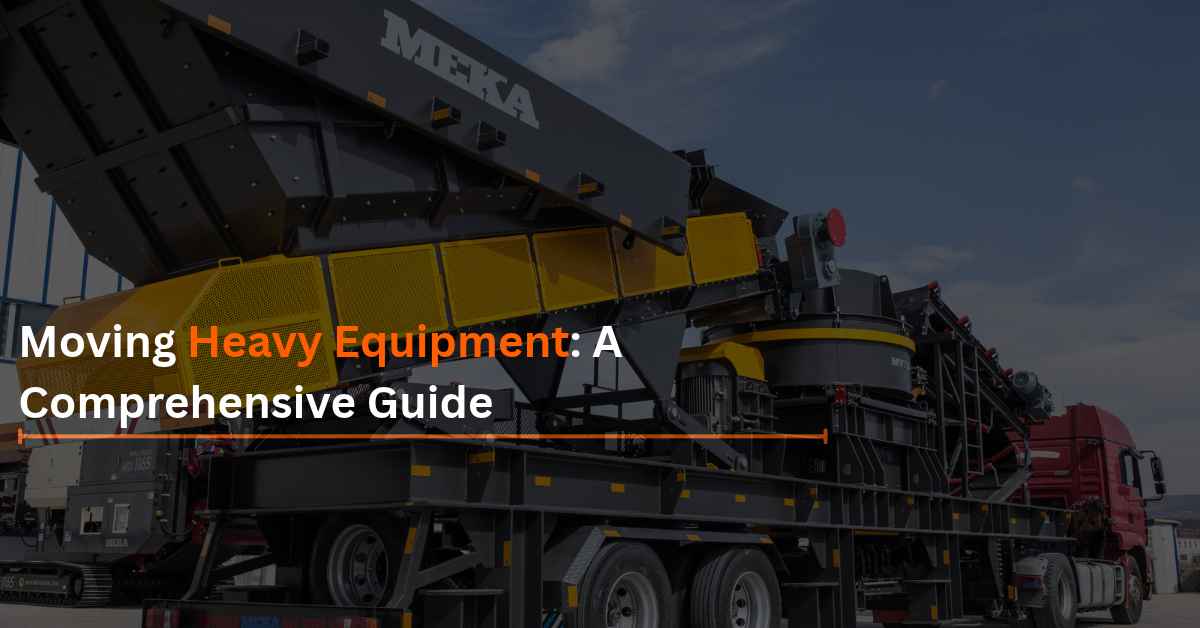
Moving heavy equipment requires careful planning, suitable transport vehicles and experienced operators. Whether your business needs to relocate factory machinery, deliver construction equipment or move industrial components between sites, choosing the right transport solution helps reduce delays and protect valuable assets.
A HIAB truck can be an effective option for moving heavy equipment because it combines a transport vehicle with a hydraulic crane. This allows suitable loads to be lifted, transported and unloaded without always requiring a separate crane at the delivery location.
In this guide, we explain how to plan heavy equipment transportation and why a HIAB truck may be suitable for your next project.
1. Assess the Equipment Before Moving
Before arranging transport, understand the size, weight and condition of the equipment you need to move. These details help determine which truck and lifting equipment are suitable.
Start by checking the manufacturer’s specifications for the equipment’s weight and dimensions. Identify any detachable components that can be removed to make transportation easier.
You should also consider whether the equipment contains fluids, batteries or other components that require special preparation before moving.
Important details to provide your transport company include:
- Equipment weight, length, width and height
- Pickup and delivery addresses
- Loading and unloading requirements
- Site access restrictions
- Required delivery date and timeframe
Providing accurate information helps the transport provider plan the job and identify potential problems before arriving onsite.
2. Why Use a HIAB Truck for Heavy Equipment Transport?
A HIAB truck features a truck-mounted hydraulic crane that can lift suitable equipment onto the vehicle and unload it at the destination.
This combination offers several benefits for businesses and industrial operators.
- Efficient loading and unloading: The mounted crane can lift equipment directly onto the truck, reducing reliance on separate lifting machinery where the job allows.
- Flexible delivery options: A HIAB truck may be suitable for construction sites, factories, warehouses and industrial facilities where equipment needs to be placed in a specific location.
- Reduced manual handling: Mechanical lifting can reduce the need for workers to move heavy or awkward equipment manually.
- Convenient transport: Combining lifting and transportation in one vehicle can simplify logistics and reduce the need to coordinate multiple service providers.
However, HIAB trucks have specific lifting limits. The operator must consider the load’s weight, crane reach, lifting radius, truck configuration and ground conditions before confirming the job.
3. Prepare the Site for Transportation
Site preparation is essential for a safe and efficient equipment move.
At the pickup location, clear unnecessary obstacles and provide enough space for the truck to position itself. Check for overhead powerlines, low structures, uneven ground and restricted access.
The delivery site should also be ready before the equipment arrives. Confirm where the machinery will be placed and ensure the area can accommodate the truck and its stabilisers.
If equipment needs to be lifted over a fence or positioned behind a building, inform the transport provider in advance. Photographs and measurements can help the operator assess whether the crane has sufficient reach and lifting capacity.
Never assume that a crane can lift a load over every obstacle. Each job requires an assessment of the equipment, lifting conditions and surrounding environment.
4. Secure the Equipment During Transport
Once the equipment has been loaded, it must be secured correctly to prevent movement during transit.
Suitable load restraints should be selected according to the equipment’s weight, shape and approved securing points. Any loose components should be removed or secured separately.
The operator must also consider load distribution, vehicle limits and applicable road transport requirements.
For particularly valuable or delicate machinery, discuss protective measures with your transport provider before the move. Proper handling can help prevent damage to components and reduce the risk of costly repairs.
5. Understand Heavy Equipment Transport Costs
The cost of moving heavy equipment depends on the complexity of the job. Common pricing factors include transport distance, equipment dimensions, weight, crane capacity and the time required for loading and unloading.
Additional charges may apply for difficult site access, waiting time, permits or specialised lifting requirements.
Request an itemised quote and provide complete information about your equipment and both locations. This helps your transport provider estimate the work more accurately.
6. Book HIAB Truck Transport with Sydney Hiab Logistics
Moving heavy equipment becomes easier when you have the right vehicle, suitable lifting equipment and a clear transport plan.
Sydney Hiab Logistics is worth considering for businesses that require HIAB truck transport for machinery, industrial components and other heavy loads.
When requesting a quote, provide the equipment’s weight and dimensions, pickup and delivery details, and any special lifting requirements. This allows the team to assess your job and determine a suitable transport solution.
With careful preparation and professional handling, a HIAB truck can help businesses move heavy equipment efficiently while minimising disruption to daily operations.

