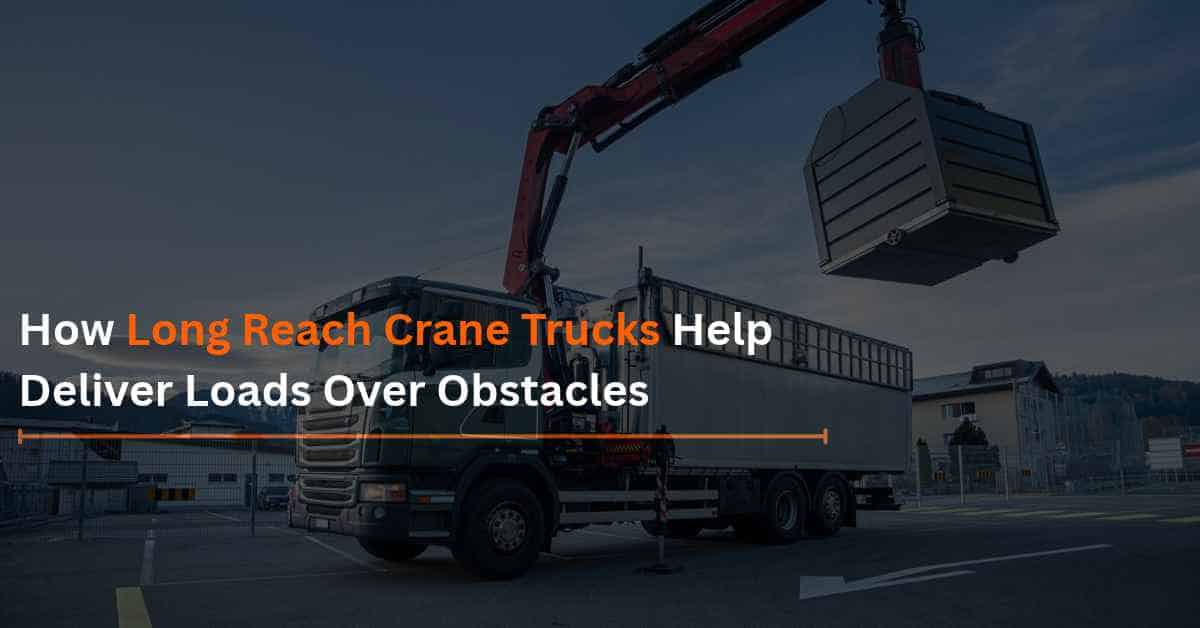
Transporting heavy materials to locations with limited access can be challenging for construction companies, builders, and industrial businesses. Obstacles such as fences, buildings, parked vehicles, narrow access roads, and existing structures can make it difficult to place materials exactly where they are needed.
Long reach crane trucks provide a practical solution by allowing operators to lift and position loads over obstacles without requiring the truck to be directly beside the final placement area. These vehicles combine transportation and lifting capabilities, helping businesses move heavy materials more efficiently.
In this guide, we explain how long reach crane trucks work, their benefits, and where they can be used.
What Is a Long Reach Crane Truck?
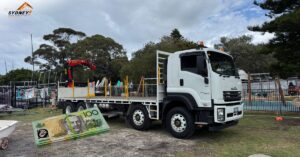
A long reach crane truck is a truck fitted with a crane that can extend its boom to lift and position loads at a distance from the vehicle. Depending on the crane model and configuration, it can reach over obstacles or place materials in areas that are difficult to access directly.
Unlike standard delivery trucks, which may require materials to be unloaded close to the vehicle, crane trucks can lift suitable loads and position them at designated locations.
However, the crane’s lifting capacity generally decreases as the working radius increases. The maximum reach and load capacity depend on the specific crane, boom configuration, and operating conditions.
How Do Long Reach Crane Trucks Deliver Loads Over Obstacles?
Long reach crane trucks use a hydraulic crane to lift, extend, and lower materials into position. The operator assesses the site, selects an appropriate lifting configuration, and positions the truck at a suitable location.
Here is how the process generally works.
1. Positioning the Truck
The driver positions the truck where the crane can operate safely. The location must provide suitable ground conditions, sufficient clearance, and enough room to deploy stabilisers where required.
Careful positioning helps the operator achieve the necessary reach while maintaining stability.
2. Extending the Crane Boom
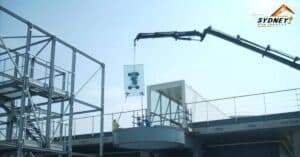
The crane boom extends towards the load’s intended destination. Depending on the equipment, the boom may extend horizontally or operate at an angle to clear walls, fences, structures, or other obstacles.
The operator must consider the load’s weight, lifting radius, boom configuration, and any overhead hazards before proceeding.
3. Lifting and Moving the Load
Once the load is properly secured, the crane lifts it and moves it along the planned lifting path.
Common loads include building materials, steel components, timber packs, machinery, and other suitable construction supplies. Appropriate lifting attachments and secure load handling are essential throughout the operation.
4. Placing the Load Precisely
The operator carefully lowers the material into the designated position. This can help deliver supplies behind fences, into restricted construction areas, or over other obstacles where direct vehicle access is unavailable.
The placement area must be prepared to receive the load safely.
Key Benefits of Long Reach Crane Trucks
1. Access to Difficult Locations
One major advantage is the ability to deliver materials beyond the immediate unloading area. This can be especially useful on residential construction sites, commercial properties, and projects with restricted access.
2. Reduced Manual Handling
Using a crane to position heavy materials can reduce the need for workers to manually carry or move them over long distances. This helps minimise manual handling risks when supported by appropriate lifting procedures.
3. Improved Project Efficiency
Combining transport and lifting in one vehicle can reduce the need for separate delivery and lifting arrangements. It may also help minimise delays caused by difficult unloading conditions.
4. More Accurate Material Placement
Experienced crane operators can position loads carefully within suitable operating limits. Accurate placement can help keep materials organised and reduce the need for additional movement around the site.
Where Are Long Reach Crane Trucks Commonly Used?
Long reach crane trucks can support a range of commercial and industrial activities, including:
- Construction sites: Delivering steel, timber, roof trusses, and building materials over fences or structures.
- Residential projects: Placing construction supplies in backyards or other areas with limited vehicle access.
- Commercial developments: Moving equipment and materials around existing buildings.
- Industrial facilities: Positioning machinery and heavy components in designated areas.
- Landscaping projects: Delivering suitable materials to locations where direct truck access is restricted.
The appropriate truck depends on the load’s weight, dimensions, required reach, and site conditions.
Important Safety Considerations
Long reach crane operations require careful planning. Operators must follow the crane’s rated load charts, account for the lifting radius, and ensure that the truck is positioned on suitable ground.
Other important considerations include overhead powerlines, nearby structures, wind conditions, exclusion zones, and the stability of the load. The lift should be carried out by appropriately trained personnel using suitable equipment and safe work procedures.
Before booking, provide the transport company with accurate load dimensions, weight, site photographs, access details, and the required placement location.
Conclusion
Long reach crane trucks offer an effective way to deliver heavy materials over obstacles and into areas where conventional unloading methods may not be practical. Their ability to combine transport, lifting, and precise placement can help construction, commercial, and industrial businesses manage challenging deliveries.
By choosing a suitable crane truck and planning the lift carefully, businesses can improve delivery efficiency while maintaining safe working conditions.
When arranging a delivery, always confirm the required reach, lifting capacity, site access, and placement requirements with an experienced crane truck transport provider.