HIAB cranes are widely used across construction, transport, landscaping, manufacturing and other industries to lift and deliver heavy or awkward loads. One of the most common questions businesses and customers ask is: what weight can a HIAB crane lift?
There is no single answer because HIAB cranes come in different sizes and configurations. Their lifting capacity depends on the crane model, boom extension, working radius, truck configuration and other factors.
Understanding these factors can help you choose the right HIAB truck for your project.
What Is a HIAB Crane?
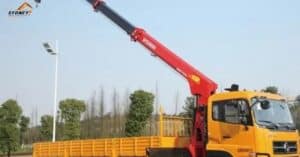
A HIAB crane is a truck-mounted hydraulic loading crane designed to lift, load and transport materials. The crane is mounted directly onto the truck, allowing the same vehicle to load materials, transport them and unload them at the destination.
This makes HIAB trucks particularly useful when materials need to be placed at a specific location rather than simply delivered to the roadside.
They are commonly used for transporting and lifting:
- Timber and building materials
- Steel and structural components
- Concrete products
- Machinery and equipment
- Pallets and bulky goods
- Construction materials
- Landscaping supplies
How Much Can a HIAB Crane Lift?
HIAB cranes vary considerably in size. Smaller units may be suitable for loads of around 1 to 3 tonnes, while medium-sized cranes can often handle approximately 3 to 8 tonnes, depending on the working radius and configuration.
Larger HIAB cranes can have lifting capacities of 8 tonnes or more, with some heavy-duty configurations capable of substantially higher capacities when operating close to the truck.
However, the maximum rated capacity should never be treated as the capacity available for every lift.
Why Does Lifting Capacity Change?
One of the most important factors affecting HIAB lifting capacity is working radius.
Working radius is the horizontal distance between the crane’s centre of rotation and the load. As the crane reaches further away from the truck, its available lifting capacity generally decreases.
For example, a HIAB crane may be capable of lifting a heavy item when it is positioned close to the truck but may have a much lower capacity when the boom is fully extended.
This is why simply knowing the crane’s maximum lifting capacity is not enough when planning a job.
What Is a Load Chart?
Every HIAB crane has a load chart that provides information about its lifting capacity under different operating conditions.
The load chart can show how capacity changes according to factors such as:
- Boom extension
- Working radius
- Crane configuration
- Hydraulic setup
- Outrigger position
- Lifting position
The operator should use the appropriate load chart to determine whether the planned lift can be completed safely.
Other Factors That Affect HIAB Capacity
The weight of the load is only one part of the calculation. The lifting team also needs to consider the location of the load and how it will be positioned.
For example, lifting a heavy item directly beside the truck can be very different from lifting the same item several metres away.
Ground conditions, truck positioning, available space, overhead obstacles and the use of lifting accessories can also affect the operation.
The weight of slings, chains, shackles and other lifting equipment should also be considered as part of the total suspended load.
Choosing the Right HIAB Truck
When arranging HIAB truck hire, it is important to provide accurate information about the load.
Tell the provider:
- The approximate weight of the load
- Load dimensions
- Pickup location
- Delivery location
- Required lifting distance
- Where the load needs to be placed
- Any access restrictions
- Whether the load requires special lifting equipment
Providing this information allows the operator or transport company to determine the appropriate crane and truck configuration.
Can a HIAB Crane Lift Heavy Machinery?
Yes, HIAB cranes are commonly used for transporting and lifting machinery and equipment. However, the crane must have sufficient capacity for the specific load and lifting conditions.
Machinery can also have an uneven weight distribution, which makes proper lifting points and suitable lifting accessories particularly important.
For heavy machinery, accurate weight information should be provided before the truck arrives so that the correct equipment can be selected.
Why Professional HIAB Operators Matter
HIAB crane operations require appropriate knowledge, training and experience. An experienced operator understands the crane’s controls, load chart, lifting limitations and site requirements.
Before beginning a lift, the operator should assess the setup, confirm the load weight and ensure the crane is positioned appropriately.
Safe lifting is not simply about having a crane that is strong enough. The entire lifting operation needs to be properly planned.
Final Thoughts
So, what weight can a HIAB crane lift? The answer depends on the specific crane and lifting conditions. Small HIAB cranes may handle a few tonnes, while larger cranes can lift significantly heavier loads.
The key is to look beyond the crane’s maximum rated capacity. Working radius, boom extension, truck configuration, ground conditions and lifting accessories can all affect the amount of weight that can be safely lifted.
If you need to transport and lift heavy materials, machinery or bulky goods, provide accurate load and placement details when requesting HIAB truck hire. This helps ensure the right crane is selected for the job and the lift can be completed safely and efficiently.