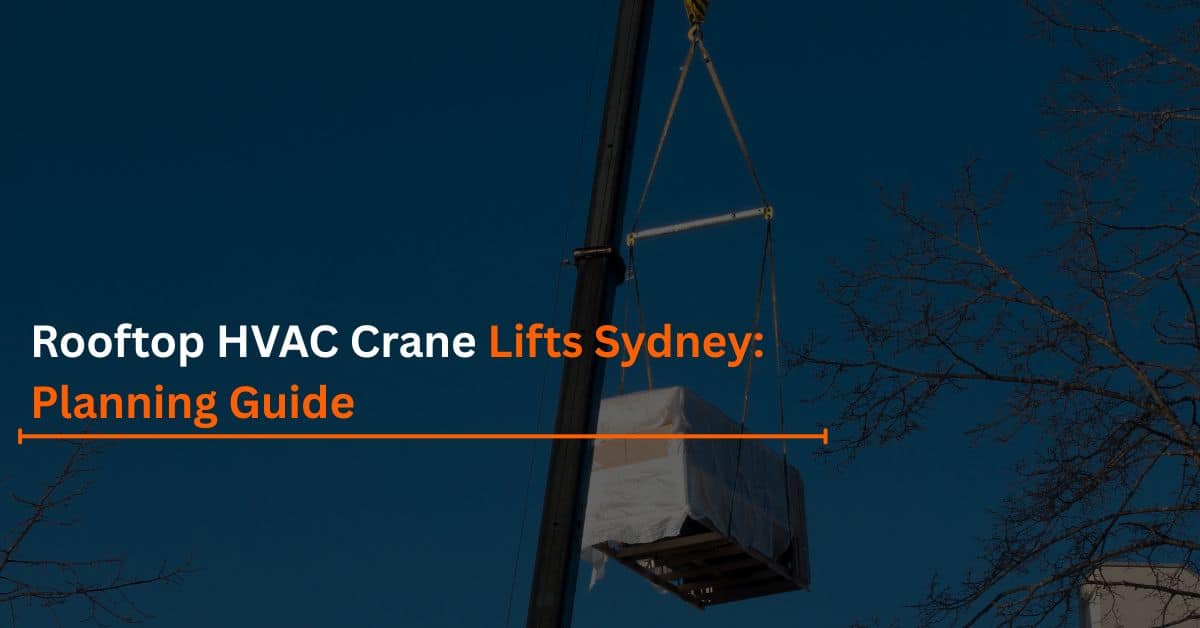
Installing or replacing rooftop HVAC equipment is a complex operation that requires careful planning, specialist equipment, and strict safety procedures. Whether you’re upgrading an air conditioning system for a commercial building, installing a new rooftop unit on an industrial facility, or replacing ageing plant equipment, a crane lift is often the safest and most efficient solution.
In Sydney, rooftop HVAC crane lifts are common across office buildings, shopping centres, schools, hospitals, warehouses, and apartment developments. However, successful lifts require more than simply hiring a crane. Proper planning helps minimise risks, avoid delays, and ensure the project is completed safely and efficiently.
This guide outlines the key considerations when planning a rooftop HVAC crane lift in Sydney.
Why Cranes Are Used for Rooftop HVAC Installations
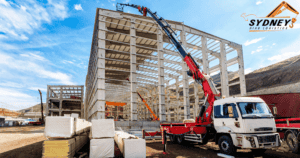
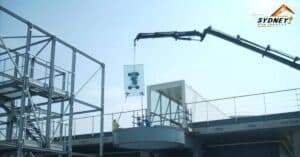
HVAC units are often large, heavy, and difficult to access using conventional lifting methods. Rooftop systems may weigh anywhere from several hundred kilograms to several tonnes, making manual handling impossible.
A crane provides the ability to:
- Lift heavy HVAC units safely
- Access difficult rooftop locations
- Reduce installation time
- Minimise workplace risks
- Improve project efficiency
For many commercial buildings, crane lifting is the only practical method of installing or replacing rooftop plant equipment.
Assess the HVAC Unit Specifications
One of the first steps in planning a rooftop crane lift is obtaining accurate information about the equipment being lifted.
Key details include:
- Unit weight
- Length, width, and height
- Lifting points
- Centre of gravity
- Manufacturer lifting recommendations
Accurate specifications are critical because they determine the type and size of crane required for the lift.
Even small errors in weight estimates can affect crane selection and site safety.
Conduct a Site Assessment
Every rooftop lift site presents unique challenges.
A professional site inspection allows crane specialists to evaluate:
- Building height
- Distance from crane setup location
- Access restrictions
- Ground conditions
- Overhead obstacles
- Nearby buildings
- Traffic conditions
- Power lines and utilities
In Sydney’s dense urban environment, access limitations often play a significant role in crane selection and lift planning.
A thorough site assessment helps identify potential issues before lift day.
Choosing the Right Crane
The appropriate crane depends on several project-specific factors.
Common crane types used for HVAC lifts include:
1. Mobile Cranes
Mobile cranes are widely used for rooftop HVAC installations due to their versatility and quick setup times.
They are suitable for:
- Commercial buildings
- Warehouses
- Retail centres
- Industrial facilities
2. All-Terrain Cranes
These cranes offer high lifting capacities and are ideal for projects requiring long reach or heavy lifting.
3. City Cranes
Designed for restricted urban environments, city cranes can access tighter locations often found throughout Sydney’s CBD and inner suburbs.
Selecting the right crane ensures the lift can be completed safely and efficiently while controlling project costs.
Lift Planning and Engineering
Many rooftop HVAC projects require a formal lift plan.
A lift plan typically includes:
- Crane positioning
- Load calculations
- Rigging methods
- Lift sequence
- Exclusion zones
- Communication procedures
- Emergency contingencies
For larger or more complex projects, engineers may also conduct structural assessments to verify rooftop load capacity and ensure the building can safely support the equipment.
Proper planning reduces risks and helps ensure compliance with Australian safety regulations.
Traffic and Council Requirements
Many Sydney HVAC crane lifts occur in busy commercial districts where public access and traffic management must be carefully controlled.
Depending on the location, requirements may include:
- Road occupancy permits
- Traffic control plans
- Lane closures
- Pedestrian management
- Local council approvals
These approvals often require advance notice and should be arranged well before the scheduled lift date.
Failing to obtain the necessary permits can lead to project delays and additional costs.
Weather Considerations
Weather conditions can significantly affect crane operations.
Strong winds are particularly important when lifting rooftop HVAC units because large equipment can act like a sail during lifting.
Before the lift, operators typically assess:
- Wind speed
- Rain forecasts
- Storm activity
- Visibility conditions
If weather conditions exceed safe operating limits, the lift may need to be postponed.
Building flexibility into the project schedule can help accommodate weather-related delays.
Safety Is the Top Priority
Safety should remain the primary consideration throughout the project.
A professional crane lift team typically includes:
- Licensed crane operators
- Dogmen
- Riggers
- Site supervisors
Safety measures may include:
- Exclusion zones
- Personal protective equipment (PPE)
- Pre-start safety meetings
- Lift briefings
- Communication systems
- Emergency response procedures
Working with experienced crane professionals helps ensure all lifting activities comply with workplace health and safety requirements.
Coordinating Trades and Contractors
Rooftop HVAC installations often involve multiple contractors working together.
These may include:
- HVAC technicians
- Electricians
- Builders
- Mechanical contractors
- Crane operators
- Traffic controllers
Clear communication between all parties helps prevent delays and ensures everyone understands the lift schedule and responsibilities.
Many successful projects involve detailed pre-lift coordination meetings to align all stakeholders.
Benefits of Professional HVAC Crane Lift Planning
Investing time in proper planning offers several advantages:
- Improved Safety: Comprehensive lift planning reduces workplace hazards and minimises risks to workers and the public.
- Reduced Project Delays: Identifying potential issues early helps avoid costly disruptions on lift day.
- Better Cost Control: Accurate crane selection and scheduling help prevent unexpected expenses.
- Efficient Installation: Well-planned lifts allow HVAC contractors to complete installations quickly and minimise downtime for building occupants.
Final Thoughts
Rooftop HVAC crane lifts in Sydney require careful preparation, specialist equipment, and experienced operators. From assessing equipment specifications and site access to obtaining permits and managing safety, every stage of the process contributes to a successful outcome.
Whether you’re installing a new rooftop air conditioning system, replacing ageing plant equipment, or upgrading commercial HVAC infrastructure, working with an experienced crane hire company can make all the difference.
With the right planning, crane selection, and project coordination, rooftop HVAC lifts can be completed safely, efficiently, and with minimal disruption to surrounding businesses and building occupants.