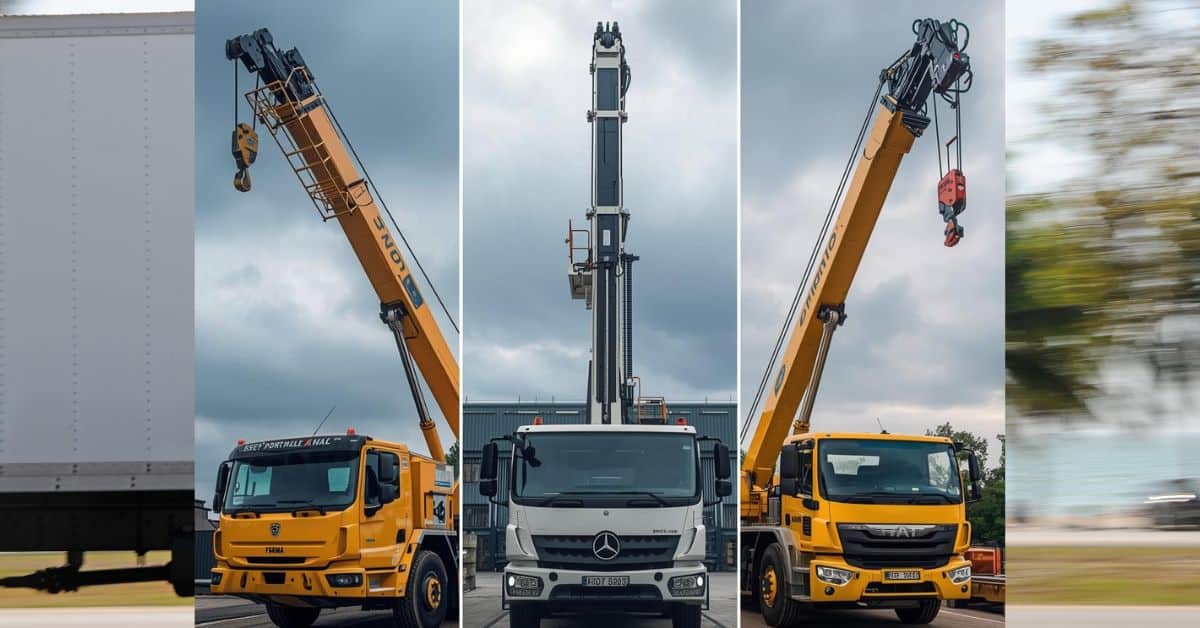
When it comes to lifting operations in construction, transport, logistics, and industrial environments, choosing the right crane is essential. But with so many crane types available, it can be confusing to know which one suits your job. Three of the most commonly used cranes in Australia and worldwide are Franna cranes, mobile cranes, and Hiab cranes.
Although they all serve the same purpose, lifting and moving heavy loads, they each offer unique capabilities, advantages, and ideal use-cases. In this guide, we break down the differences so you can understand which crane is right for your project.
What Is a Franna Crane?
A Franna crane is a type of pick-and-carry crane designed and manufactured in Australia by the company Franna (now part of Terex). Unlike traditional mobile cranes that stabilise using outriggers, a Franna is built to pick up a load and travel with it, similar to a large, articulated truck.
Key Features of a Franna Crane
- Pick-and-carry capability – Designed to lift a load and drive it to another location without needing to set up each time.
- No outriggers required – The crane relies on its own counterweight and articulated steering.
- Highly manoeuvrable – Perfect for tight spaces and busy work sites.
- Road-worthy – Can travel on public roads, reducing mobilisation time and costs.
- Lifting capacity – Typically between 10–40 tonnes depending on the model.
Best Use-Cases for a Franna
- Construction site material movement
- Machinery relocation inside industrial premises
- Mining operations
- Transport yards and logistics hubs
- Emergency recovery jobs
- Jobs needing fast setup and mobility rather than heavy lifting
Advantages
- Fast and efficient
- Highly mobile
- Great for short, frequent lifts
- Cost-effective for local jobs
Limitations
- Lower lifting capacity than large mobile cranes
- Less stable for high or long-reach lifts because no outriggers
- Not suitable for precision heavy lifting at height
What Is a Mobile Crane?
A mobile crane is a broad category of cranes mounted on a wheeled or truck-based chassis. Unlike Frannas, most mobile cranes use outriggers/stabilisers for support and are designed for heavy lifting and long-reach operations.
Common types include all-terrain cranes, truck-mounted cranes, and rough-terrain cranes.
Key Features of a Mobile Crane
- High lifting capacity – Can lift from 10 tonnes to over 1,000 tonnes, depending on the model.
- Boom variations – Telescopic, lattice, or hydraulic booms provide exceptional height and reach.
- Outriggers for stability – Enables lifting in multiple directions safely.
- Versatile terrain capability – All-terrain and rough-terrain models are built for off-road use.
Best Use-Cases for a Mobile Crane
- Large construction projects (bridges, high-rise buildings)
- Heavy industrial lifts
- Tower crane erection
- Wind farm installation
- Long-reach or high-elevation lifts
- Lifts requiring high precision
Advantages
- Exceptional lifting power
- Great stability due to outriggers
- Capable of long-reach lifts
- Suitable for complex and high-altitude work
Limitations
- Requires more setup time
- Larger mobilisation footprint
- More expensive to hire than light pick-and-carry cranes
- Not ideal for driving long distances with a suspended load
What Is a Hiab Crane?
A Hiab crane (also known as a truck-mounted crane or vehicle-loading crane) is a hydraulic loader crane mounted directly onto a truck or trailer. “Hiab” is a popular brand name, but like “Franna,” the term is widely used to describe this crane type.
Hiab cranes are designed to load and unload cargo from the truck they’re attached to, making them extremely efficient for transport and delivery operations.
Key Features of a Hiab Crane
- Mounted on a truck – The crane travels with the load.
- Hydraulic articulating boom – Provides flexibility and reach.
- Compact and versatile – Great in urban areas and tight spaces.
- Can self-load and unload – Eliminates the need for separate lifting equipment.
Best Use-Cases for a Hiab Crane
- Delivering building materials
- Machinery transport and placement
- Container transport
- Landscaping supplies delivery
- Loading/unloading equipment on the go
- Small to medium lifting tasks on job sites
Advantages
- Extremely practical for transport-plus-lift jobs
- Quick setup
- Cost-effective
- Ideal for metro and suburban operations
Limitations
- Lower lifting capacity compared to Franna and mobile cranes
- Limited reach compared to large telescopic booms
- Dependent on the truck’s stability and outriggers
Franna vs Mobile vs Hiab: Side-by-Side Comparison
| Feature / Crane Type | Franna Crane | Mobile Crane | Hiab Crane |
| Main Purpose | Pick-and-carry lifting | Heavy and long-reach lifting | Loading/unloading from truck |
| Mobility | Very high | Moderate | High |
| Setup Time | Minimal | Medium–High | Low |
| Lifting Capacity | Medium (10–40t) | Very high (10–1000t+) | Low–Medium (1–20t typically) |
| Stability | Medium, no outriggers | Very high (outrigger supported) | Medium (truck stabilisers) |
| Best For | Fast site lifts, moving loads | Precision heavy lifts, construction | Delivery + lifting combo |
| Road Travel | Yes | Yes (with restrictions) | Yes (integrated) |
| Reach Height | Limited | Very high | Moderate |
Which Crane Should You Choose?
Each crane shines in different situations. Here’s how to decide:
Choose a Franna if:
✔ You need to move loads quickly around a site
✔ You need pick-and-carry capability
✔ You require fast, low-cost mobilisation
✔ Lifts are short-reach and moderate in weight
Choose a Mobile Crane if:
✔ You need high lifting capacity
✔ You are working on large construction or industrial projects
✔ Stability and precision are critical
✔ You need long reach or lifting at height
Choose a Hiab Crane if:
✔ You need a truck that can deliver and lift
✔ You are working in metro areas or tight spaces
✔ Lifts are relatively small
✔ Speed and convenience are essential
Final Thoughts
Franna, Mobile, and Hiab cranes all play important but very different roles in lifting and transport operations. A Franna offers unmatched mobility for pick-and-carry jobs, mobile cranes deliver unbeatable lifting power and reach, while Hiab cranes provide the perfect combination of delivery and lifting on a single vehicle.
Choosing the right crane type improves efficiency, safety, and cost-effectiveness, so understanding their differences is key to planning your next project.